

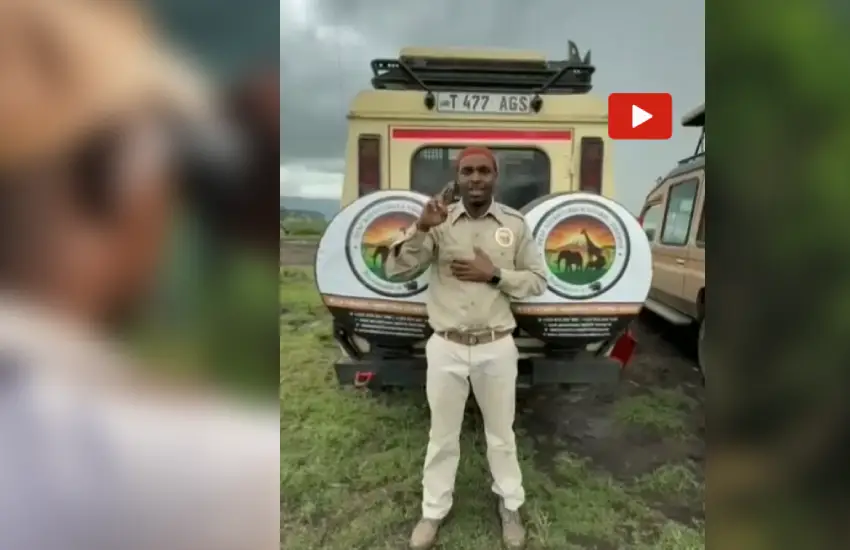
Deaf Adventure Safaris offers accessible safari tours in Tanzania specifically designed for deaf and hard-of-hearing people. The tours are led by Sadikiel Lewison Materu, a deaf guide who uses TSL, KSL, and International Sign Language, thereby providing a fully visual, inclusive nature experience in Africa’s national parks.
Who is Deaf Adventure Safaris?
Deaf Adventure Safaris is a travel company based in Tanzania. The company organizes safaris—nature-based trips—for deaf and hard-of-hearing people. The goal is to ensure that everyone can participate on an equal footing.
The safaris take place in Tanzania in East Africa. There are many wild animals, national parks, and beautiful landscapes there.
Who is the guide Sadikiel Lewison Materu?
The main guide is Sadikiel Lewison Materu.
He is deaf himself.
Sadikiel is a professional safari guide with many years of experience.
He knows the national parks, animals, and culture of Tanzania very well.
He knows several sign languages:
- Tanzanian Sign Language (TSL)
- Kenyan Sign Language (KSL)
- International Sign (often based on ASL)
This allows him to communicate directly in sign language with many deaf travelers from different countries.
Why is this tour specifically designed for the deaf?
Many safaris are planned for hearing people.
Often, explanations are given only verbally.
Deaf people then understand little or nothing.
Deaf Adventure Safaris is different:
- The guide is deaf.
- Communication takes place in sign language.
- Everything is explained visually.
- There are no barriers caused by spoken language.
This way, deaf and hard-of-hearing travelers can take it all in:
See animals, understand information, ask questions, talk to others—all in sign language.
How is communication handled?
Communication on the safari is visual.
- Sign language: TSL, KSL, and International Sign.
- Clear facial expressions and gestures.
- Pointing out features in the landscape: animals, plants, tracks.
- Visual aids, such as pictures or sketches.
This allows groups with different sign languages to participate in the safari.
Travelers who are still learning sign language benefit from the strong visual cues.
What can you experience on a safari?
Deaf Adventure Safaris offers a variety of activities in Tanzania:
- Game drives through national parks
- Wildlife viewing (e.g., lions, elephants, giraffes; depending on the park)
- Hikes through nature, forests, and to waterfalls
- Camping safaris and overnight stays in lodges or tents
- Visits to cultural sites, such as traditional villages and historical sites
- Photo stops for wildlife and landscape photos
Additional activities may be included, depending on the tour:
- Mountain hikes
- Bicycle tours
- Visits to schools for the deaf
- Insights into the lives of local communities
All information provided during the trip is explained in sign language.
What does “inclusive safari” mean?
“Inclusive safari” means that the trip is planned so that deaf and hard-of-hearing people can participate on an equal footing.
This means:
- No audio-only announcements. Everything important is communicated in sign language.
- The guide is deaf and has personal experience with barriers.
- Groups are small. Everyone can see the guide clearly.
- The tours are visually oriented: pointing out animals, showing tracks, explaining the landscape.
- Accommodations and the daily schedule are explained clearly in advance.
This ensures there are no communication barriers.
Deaf people don’t have to “guess along”—they receive all the information.
Safety and Professionalism
Deaf Adventure Safaris works with professional safari guides.
They know the rules in the national parks, maintain a safe distance from the animals, and ensure the group’s safety.
Clear information is provided before the tour:
- What is allowed?
- How should we behave around animals?
- What clothing is appropriate?
- What will we eat and drink?
Everything is explained in sign language so that everyone understands the safety instructions clearly.
Who is this offer suitable for?
Deaf Adventure Safaris ist geeignet für:
- deaf people
- people with hearing loss
- CODAs and family members
- hearing friends who use sign language or are open to visual communication
Trips are available:
- alone
- as a couple
- in a group
Small groups make communication easier.
Warum ist das wichtig für die Deaf Community?
Traveling in sign language is a new experience for many Deaf people.
In the past, there were very few suitable options available.
Deaf Adventure Safaris demonstrates:
- Deaf people can enjoy the same quality of travel as hearing people.
- Information and experiences are accessible.
- A Deaf guide can be a professional expert in nature and tourism.
This strengthens the Deaf community because:
- Deaf role models are visible
- Accessibility in international tourism is demonstrated
- Other providers can learn how inclusive offerings work
Example: A Day on Safari (Simplified)
Here’s what a typical day on safari might look like:
- Early morning:
Meet up, brief welcome in sign language, departure in the safari vehicle to the national park. - Morning:
Drive through the park; the guide points out animals using sign language and explains their behavior, tracks, and the landscape. - Noon:
Break, food and drinks, time for questions and conversation in sign language. - Afternoon:
More animal sightings, possibly a short walk in designated areas. - Evening:
Return to the lodge, brief summary of the day in sign language, information about the next day’s program.
Conclusion
Deaf Adventure Safaris in Tanzania offers an inclusive safari experience designed specifically for deaf and hard-of-hearing travelers.
With deaf guide Sadikiel Lewison Materu, who uses TSL, KSL, and International Sign, the safari is explained entirely in sign language, allowing guests to experience it without communication barriers.
For the deaf community, this is an important step toward barrier-free, self-determined travel in Africa.


