

The case of Bassim Saleh Yassin has drawn international attention. The 67-year-old deaf Palestinian was the victim of a severe act of violence on January 8, 2026, in the village of Deir Sharaf in the northern West Bank. Masked Israeli settlers attacked him on the grounds of a plant nursery, leaving him seriously injured. What makes the incident particularly disturbing is not only the brutality of the attack, but also the extreme vulnerability of the victim: Yassin is deaf and was unable to hear warnings or escape in time. The case highlights both the tense security situation in the region and the often-overlooked risks faced by people with disabilities in conflict zones.
Who Is Bassim Saleh Yassin?
Bassim Saleh Yassin is a Palestinian laborer who had worked for many years at a German-Palestinian plant nursery near Deir Sharaf. Deaf since birth, he communicates nonverbally. Colleagues describe him as a quiet, reserved man who carried out his work reliably. On the day of the attack, this very condition became life-threatening: in a situation where seconds can determine safety or injury, he had no access to auditory warnings.
The Attack: What Happened
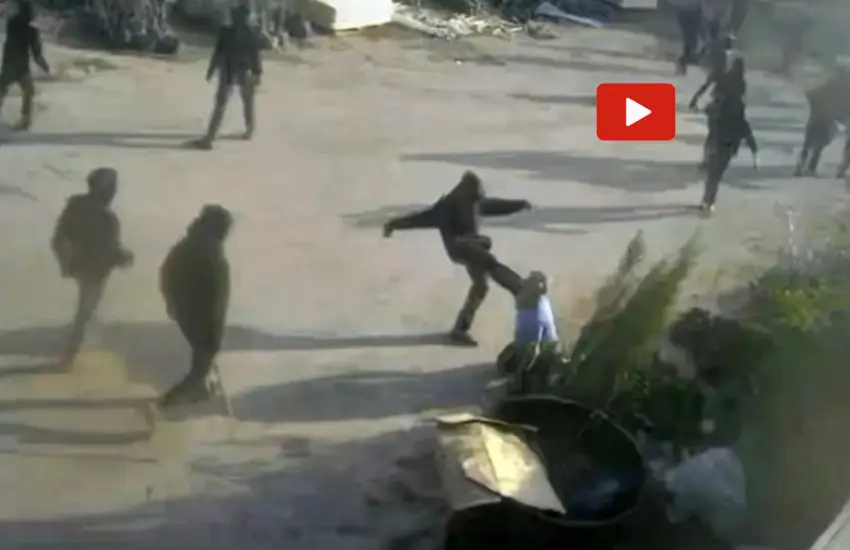
Surveillance cameras captured the incident. The footage shows dozens of masked men dressed in black, armed with sticks, storming the nursery grounds. Other workers immediately recognized the danger and fled. Yassin, however, remained behind. Unable to hear his colleagues shouting warnings, he realized the threat too late.
When he finally saw the attackers, he attempted to run away but was quickly overtaken. He was pushed to the ground and repeatedly beaten and kicked. The assault lasted several minutes. At the same time, the attackers set four vehicles on the property on fire. According to the nursery’s operators, this was already the third attack on the same facility within a year, suggesting a pattern rather than an isolated incident.
Injuries and Medical Treatment
As a result of the assault, Bassim Saleh Yassin suffered serious injuries. Doctors reported broken bones in his hand, as well as bruises and injuries to his face, chest, and back. He was taken to hospital immediately and remains under medical care. His condition is considered stable, but the physical and psychological consequences are significant.
Family members of the nursery’s owners, who spoke anonymously out of fear of reprisals, described the attack as extremely violent. They emphasized that Yassin had no realistic opportunity to defend himself or call for help.
Context: Rising Violence in the West Bank
The attack on Yassin is part of a broader pattern. For months, international media and human rights organizations have reported an increase in settler violence in the West Bank. The situation has reportedly worsened since the renewed Gaza conflict and during the olive harvest season in autumn 2025.
Palestinian villages, agricultural sites, and individual civilians are frequently affected. Critics describe an atmosphere of impunity. While Israeli authorities regularly state that such acts are investigated, many Palestinians report insufficient protection and a lack of accountability. A previous attack on the same nursery reportedly caused damages exceeding 600,000 US dollars.
Disability and Conflict: A Critical Perspective
Yassin’s case highlights an often-neglected issue: people with disabilities are especially vulnerable in conflict zones. Deaf individuals cannot hear shouts, gunfire, or other acoustic warning signals. In chaotic and violent situations, this severely limits their ability to react or escape.
International agreements such as the UN Convention on the Rights of Persons with Disabilities emphasize the need for special protection and equal rights. In practice, however, these principles are rarely enforced during armed conflicts. The attack on Yassin underlines the urgent need for accessible safety measures, visual warning systems, and targeted protection for people with disabilities.
Public Reaction and Broader Significance
After the surveillance footage was published, the incident spread rapidly across social media and international news outlets. Many viewers expressed shock at the level of violence and solidarity with the victim. The case reignited debates about the situation in the occupied West Bank, accountability, the rule of law, and human rights.
For the Deaf community in particular, the case carries additional significance. It demonstrates how easily deaf people can be overlooked in emergencies—and how dangerous that neglect can be.
Conclusion
The attack on Bassim Saleh Yassin is more than a single act of violence. It reflects a deeply strained political reality, ongoing insecurity, and the heightened vulnerability of people with disabilities in areas of conflict. A balanced journalistic assessment must consider both the individual suffering and the broader context. What is clear is that without effective protection, awareness, and accountability, similar incidents are likely to recur—with severe consequences for those least able to protect themselves.


