

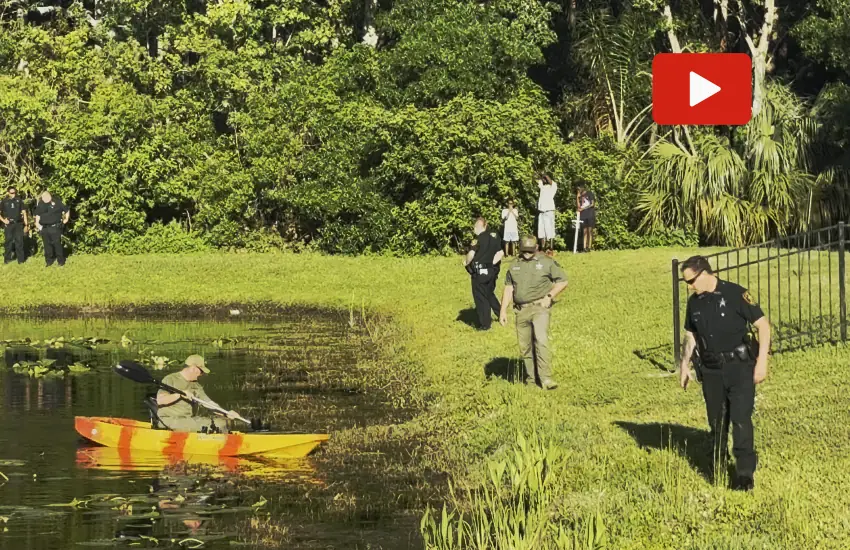
A tragic accident in Palm Harbor, Florida, has deeply shaken the community. A three-year-old boy with autism, who was non-verbal, left his family’s apartment unnoticed and was later found dead in a nearby pond. The incident raises urgent questions about safety measures for children with disabilities and shows how quickly just a few minutes can become life-threatening. This report summarizes the key facts, explains the search operation, and highlights important considerations—especially for families with deaf or hard-of-hearing members.
A Tragic Afternoon in Palm Harbor
On Sunday afternoon, the parents of young Kyrie Larry reported him missing. At around 4:30 p.m., deputies from the Pinellas County Sheriff’s Office responded to the call. The family lived in an apartment complex on Lancaster Court. Authorities said Kyrie had left the apartment without anyone noticing—his parents believed he was playing with his older brother.
Adding to the tragedy, both parents are hearing impaired and did not hear the door open. When they checked on Kyrie and realized he was gone, they immediately contacted law enforcement.
Large-Scale Search with Specialized Units
After receiving the missing child report, authorities acted quickly. Several specialized units were deployed:
- Aviation Unit for aerial search
- K9 teams and bloodhounds to track potential scent trails
- Marine and Dive Units due to several bodies of water in the area
Doorbell cameras played a crucial role in narrowing down the search area. Footage from the family’s own doorbell camera showed the direction the child had taken. Another nearby doorbell camera captured Kyrie near a pond, only three buildings away from the family’s home.
These recordings allowed search teams to focus on a specific location.
Heartbreaking Discovery in the Pond
Using these visual clues, the Dive Team searched the roughly seven-foot-deep pond. Shortly afterward, divers located the boy’s body.
He was pronounced dead later that evening.
Chief Deputy David Danzig explained during a press conference that evidence suggests the child drowned. The final cause of death will be determined by the Medical Examiner’s Office.
Clearly affected, Danzig stated:
“Anytime a child loses their life under circumstances like this, it’s a terrible night for everybody involved. We all hoped for a better outcome.”
Why Children with Autism Face Higher Risks
Many children on the autism spectrum—especially non-verbal children—tend to wander or explore their surroundings independently. They often do not recognize dangers such as roads or water. Sadly, this leads to frequent accidents.
Common risk factors include:
- strong curiosity and urge to explore
- limited awareness of potential dangers
- rapid and silent movement away from caregivers (“wandering” or “elopement”)
- communication challenges
When caregivers are deaf or hard of hearing, unnoticed door openings can further increase the risk—without implying any fault or blame.
Safety Tips for Families with Deaf or Hard-of-Hearing Caregivers
These recommendations may help prevent similar tragedies:
1. Install door and window safety locks
Childproof locks, secondary latches, or higher-placed handles can prevent unnoticed exits.
2. Use vibration or light-based alert systems
Special alarms can send visual or vibrating signals when a door is opened.
3. Consider GPS tracking devices for autistic children
Tracking devices can save valuable minutes during a search. Many can be attached to clothing or shoes.
4. Inform nearby neighbors
A quick conversation with neighbors can be helpful if the child has a history of wandering.
5. Know nearby water hazards
Ponds, pools, and canals often attract children. Families should be aware of all water sources in the area.
Conclusion
The death of young Kyrie Larry is a heartbreaking tragedy and a powerful reminder of how crucial safety measures and quick responses are—especially for children with autism or families with deaf or hard-of-hearing members. This case highlights that it is not about blame but about structural support, accessible safety tools, and better awareness. Any family can be affected.
This incident should therefore serve as a wake-up call to strengthen protective measures and reduce barriers so that similar tragedies can be prevented in the future.
Picture: WTSP


