

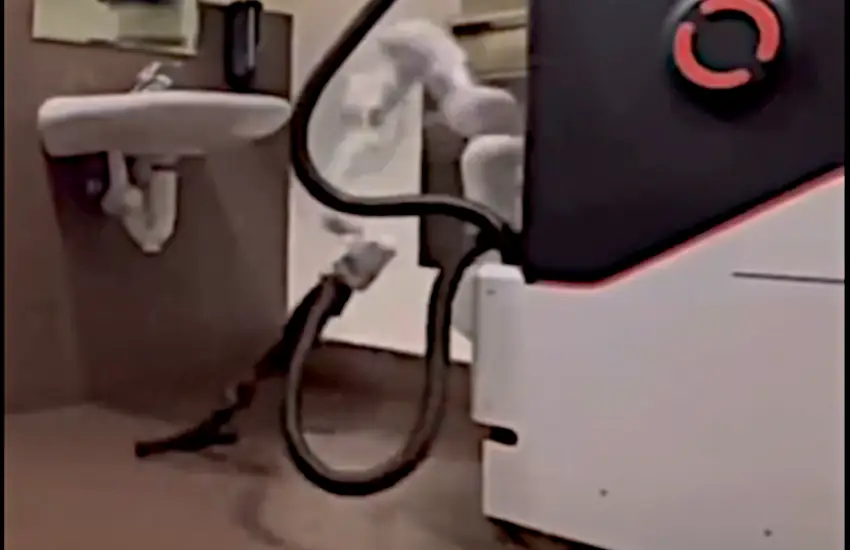
Many deaf people work as cleaners in offices, schools, hospitals, or shopping centers. In recent years, there has been a growing number of cleaning robots powered by artificial intelligence (AI). Many are asking: Will deaf workers lose their jobs to these robots? Here, we explain the key points—clearly, informatively, and in detail.
Why Are Companies Using More Robots?
- Shortage of Skilled Workers: Fewer people want to work as cleaners. Many companies struggle to find enough staff.
- Cost Savings: Businesses aim to reduce wage expenses and save on labor costs by using robots.
- Improved Technology: Today’s robots can perform many tasks automatically. They are becoming increasingly reliable and affordable.
- Consistent Cleanliness: Robots work uniformly and don’t take breaks. Their cleaning results are often very thorough.
Why Are Companies Using More Robots?
- Shortage of Skilled Workers: Fewer people want to work as cleaners. Many companies struggle to find enough staff.
- Cost Savings: Businesses aim to reduce wage expenses and save on labor costs by using robots.
- Improved Technology: Today’s robots can perform many tasks automatically. They are becoming increasingly reliable and affordable.
- Consistent Cleanliness: Robots work uniformly and don’t take breaks. Their cleaning results are often very thorough.
What Advantages Do Robots Offer Companies?
- Fast Cleaning: Robots can clean large areas continuously—especially useful at night or on weekends.
- Uniform Quality: Robots don’t make mistakes from fatigue or inattention.
- Lower Labor Costs: Companies pay fewer wages.
- Less Absenteeism: Robots don’t get sick or need vacation time.
What Are the Disadvantages?
- Job Losses: Particularly routine tasks—where many deaf people are employed—can be replaced by robots, threatening these jobs.
- Maintenance and Repairs: Robots can break down or malfunction and then require someone to repair them.
- High Upfront Costs: A modern cleaning robot is expensive; not every company can afford one immediately.
- Limited Capabilities: Robots cannot handle every task—small corners, stairs, or special jobs often still require human work.
What about Costs?
- Operating Costs for Robots: Robots need electricity and regular maintenance. Although this costs money, it is often cheaper than wages for multiple cleaners.
- Personnel Costs: Human workers receive wages, social benefits, paid leave, and may call in sick—making labor more expensive for companies.
- Long-Term Perspective: For large firms with extensive cleaning needs, using robots often pays off in the long run, saving money over time.
What Happens When a Robot Breaks Down?
- Robots: Occasionally require maintenance or repairs. When they are out of service, technicians must fix them.
- Humans: Also sometimes absent due to illness or vacation. The company then needs replacements.
What Does This Mean for Deaf People?
Many simple cleaning tasks are at risk of being automated. This particularly affects deaf workers, who are often employed in this field. However, not every task can be performed by robots. Humans remain essential for challenging areas, supervising robots, and performing maintenance.
New jobs are also emerging: someone must monitor, operate, and repair the robots. These roles often require new qualifications. It is crucial that deaf people have the opportunity to receive further training and take on these new responsibilities.
Conclusion
- Robots are increasingly used but do not entirely replace humans.
- Simple tasks may disappear, but new roles arise.
- Deaf people should have the chance to learn new skills—such as operating or maintaining robots.
- Companies and policymakers must ensure that deaf individuals are not disadvantaged but instead gain new opportunities.
Important:
Don’t fear technology! Find out about training opportunities. Talk with your employers and advocacy groups. Together, you can find solutions so that deaf people can continue to have good jobs in the future.
Quelle: Instagram ianhua Yang


