

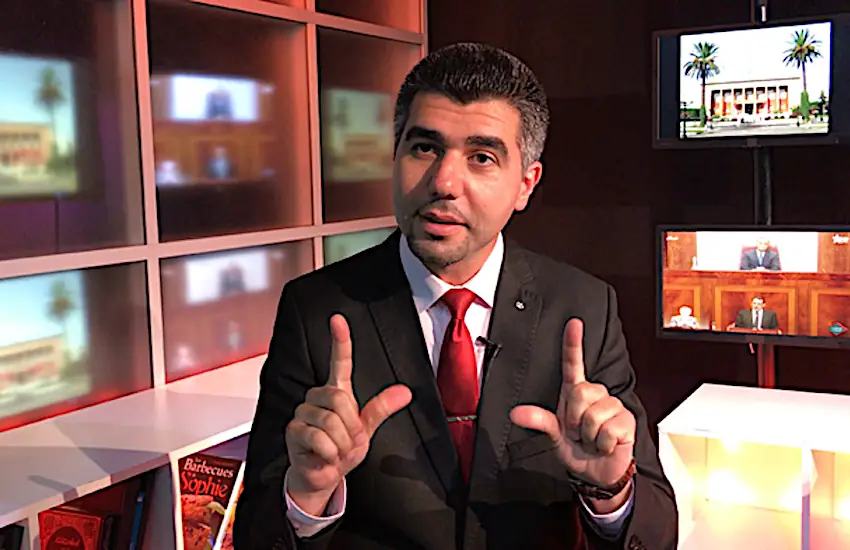
Mustapha Kettani is a well-known figure in Morocco, especially for the deaf community. He works as a sign language interpreter in the Parliament, ensuring that deaf people can follow parliamentary debates and news. His job is challenging but crucial for the rights of people with hearing disabilities. In this interview, Kettani talks about his career, his responsibilities, and the social importance of his work.
From Rabat to the Parliament: Kettani’s Career Path
Mustapha Kettani was born in 1978 in Rabat. After completing his baccalaureate in 1998, he studied at Mohammed V University and earned a diploma as a technical specialist in information sciences. He then joined the Ministry of Solidarity and Social Integration, part of the Secretariat for People with Disabilities. He worked for over seven years in Minister Chekrouni’s office.
In 2004, Kettani became a sworn expert before the Court of Appeal in Hay Riad. This marked the beginning of his career as a sign language interpreter. In 2014, he joined the Parliament. He met the President of the House of Representatives, Rachid Talbi Alami, who immediately assigned him to interpret parliamentary sessions. No audition or test was required. Even before the law guaranteeing access to information was passed, the president wanted to ensure that people with disabilities could access information. Kettani’s first session was extremely demanding: he had to interpret two parallel sessions within a very short time.
Motivation: Giving a Voice to the Voiceless
Kettani describes the experience of deaf people vividly: “Imagine watching the news with the volume off. After two minutes, you would feel anxious because you cannot understand what is being said. That is how a deaf person feels every day of their life.” This constant state of uncertainty and mistrust is a reality for many deaf individuals.
His goal is to create an environment where deaf people feel safe and can access information independently. In 2019, Kettani founded the National Organization of Sworn Sign Language Experts to protect the rights of deaf people, especially in legal matters such as inheritance, where deaf people are often disadvantaged.
Challenges of Sign Language Interpreting
Interpreting in Parliament is extremely demanding. Kettani must translate speeches accurately and in real time. He pays attention not only to words but also to facial expressions and gestures, which are integral to sign language.
The length and intensity of the sessions are another challenge. Budget sessions, for example, can last seven to eight hours, while international standards recommend a maximum of 30 minutes per session. Currently, Kettani works alone, whereas the European Parliament has seven interpreters. Between sessions, he handles administrative tasks, organizes diplomatic receptions, and interprets press conferences, including during crises like the COVID-19 pandemic.
Social Impact of His Work
Kettani’s work directly affects the lives of deaf people. Many thank him for translating parliamentary debates and news. Access to reliable information is especially important in religious matters, where a lack of local resources can lead to misunderstandings. Some deaf people rely on information from unreliable sources, which can create family conflicts.
Furthermore, literacy among deaf people in Morocco remains low. Many only reach middle school, and few earn a baccalaureate. Specialized educational and informational programs are therefore essential to help deaf people live independently and participate fully in society.
Conclusion: Interpreting as a Key to Inclusion
Mustapha Kettani’s work highlights the vital role of sign language interpreters in enabling social participation for deaf people. They ensure that people with hearing disabilities have access to information and can exercise their rights. Kettani’s dedication goes beyond interpretation: he defends the rights of deaf people, raises societal awareness, and helps them engage confidently in public life.
His work shows that communication is more than just language—it is a tool for equality, participation, and social integration. In countries where awareness of the rights of people with hearing disabilities is still growing, this work is indispensable.
Bild: lopinion.ma


