

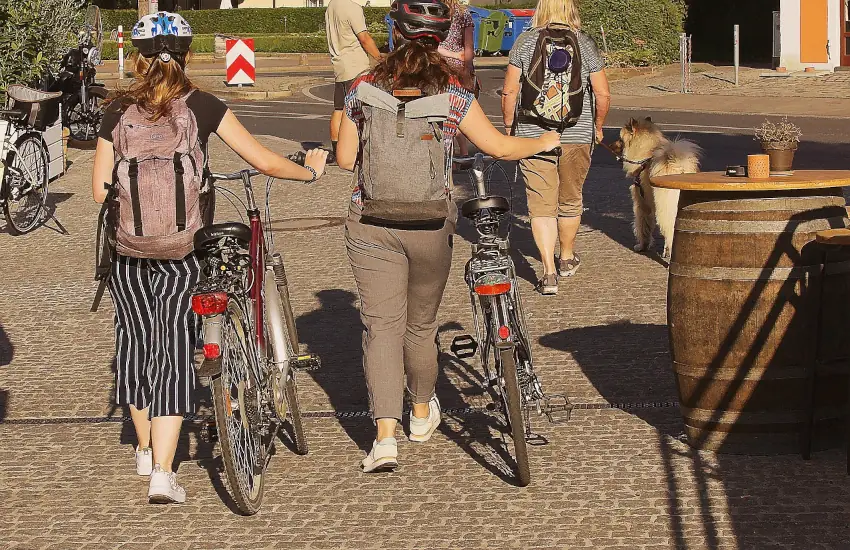
Pedestrian zones and marketplaces are meant to be places of calm, community, and safety – or at least they should be. However, in many cities, more and more people are observing a growing problem: cyclists and e-scooter riders are using these areas recklessly, even though they are not allowed to ride there. Deaf people are especially affected, as they cannot hear approaching vehicles, and elderly people often react more slowly or are easily startled.
This development is dangerous, avoidable, and often leads to accidents that can result in injuries, hospitalizations, and even long-term damage.
Our goal is clear: No more bicycles or e-scooters on sidewalks, in pedestrian zones, or marketplaces – unless permitted by official traffic signs. This article explains the background, gives advice, and shows why consideration in everyday life is vital.
Deaf People Require Special Protection
Deaf and hard-of-hearing individuals live every day with a sensory limitation. They cannot hear approaching vehicles, even if they ring a bell or honk.
In a busy pedestrian zone – filled with conversations, children, shopping bags, and visual distractions – keeping track of everything is already difficult. If a fast-moving e-scooter or bicycle suddenly approaches from behind, it can quickly become a dangerous situation.
The problem is:
- Deaf people often recognize the danger too late.
- There are no warnings or acoustic signals.
- Many riders go too fast or do not watch out for pedestrians.
- A collision can lead to serious falls and injuries.
There is another major issue:
Deaf people are often insulted or blamed for “not paying attention.” But the problem is not with them – they simply cannot perceive sound and therefore react differently than hearing people. Many cyclists and e-scooter riders have no understanding of this invisible disability and respond with aggression or disdain. This is discriminatory and hurtful – and makes the situation even more difficult for deaf individuals.
Elderly People Are Also at Risk
Not only deaf people are affected – elderly individuals are also among the most vulnerable. Many cannot react quickly, walk with a cane or walker, or have limited vision. For them, dodging a scooter or bike at the last moment can be very difficult or even impossible.
Examples from everyday life:
- An elderly woman is startled and falls while trying to step aside.
- A walker user is nearly brushed by an e-scooter rider.
- A cyclist rides too closely past a group of seniors – resulting in a collision.
Scenes like these happen almost daily in many cities – with the same outcomes: fear, injury, anger, and incomprehension.
What’s Allowed and What Isn’t?
The rule is clear: cycling is prohibited in pedestrian zones unless a sign specifically allows it (e.g., “Cyclists permitted”). The same applies to e-scooters. Yet many people ignore these rules – whether out of ignorance, convenience, or selfishness.
Important facts:
- Riding a bike or e-scooter in a pedestrian zone without permission is a regulatory offense.
- Fines may apply.
- In the event of an accident, the rider is usually liable.
- Liability insurance may refuse to pay for damages.
This also leads to public costs: emergency services, hospital treatments, and rehabilitation all burden the healthcare system.
Why Consideration Is So Important
Traffic rules exist to protect everyone. In pedestrian zones, people should feel safe – without constantly fearing they might be run over. It’s about mutual respect and responsibility.
Many people think: “But I ride carefully.”
However, even at low speeds, a moment of inattention can have serious consequences. For people who cannot hear or react quickly, every encounter with a vehicle can be potentially dangerous.
Tips for More Safety and Consideration
For two-wheeler riders (bicycles & e-scooters):
- Walk your bike or scooter if there is no “cyclists permitted” sign.
- Slow down, keep a safe distance – especially around people with visible impairments.
- If in doubt, dismount.
- Use alternative routes where riding is allowed.
For cities and municipalities:
- Clear signage: where is riding allowed and where not?
- Increase enforcement by public order officers.
- Launch awareness campaigns: with posters, flyers, or digital messages.
- Improve separation of pedestrian and vehicle areas – e.g., with color markings.
For pedestrians:
- Be cautious in areas with poor visibility.
- Teach children not to run off suddenly.
- Document dangerous encounters (e.g., with photos) and report them to the city if necessary.
Conclusion: Only Together Can We Make Pedestrian Zones Safe Again
Two-wheeler riders speeding through pedestrian zones are not just an annoyance – they endanger lives. Deaf people and the elderly especially need protection in these areas. The rules are clear: those riding bicycles or e-scooters may only do so if it is explicitly permitted.
A short detour or a few minutes walking can prevent accidents and save lives. Society must relearn to be more considerate – not just out of politeness, but out of true responsibility.
Our appeal: Cities, citizens, cyclists – everyone must work together to make pedestrian zones safe again for all.
Bild von Wolfgang Eckert auf Pixabay


